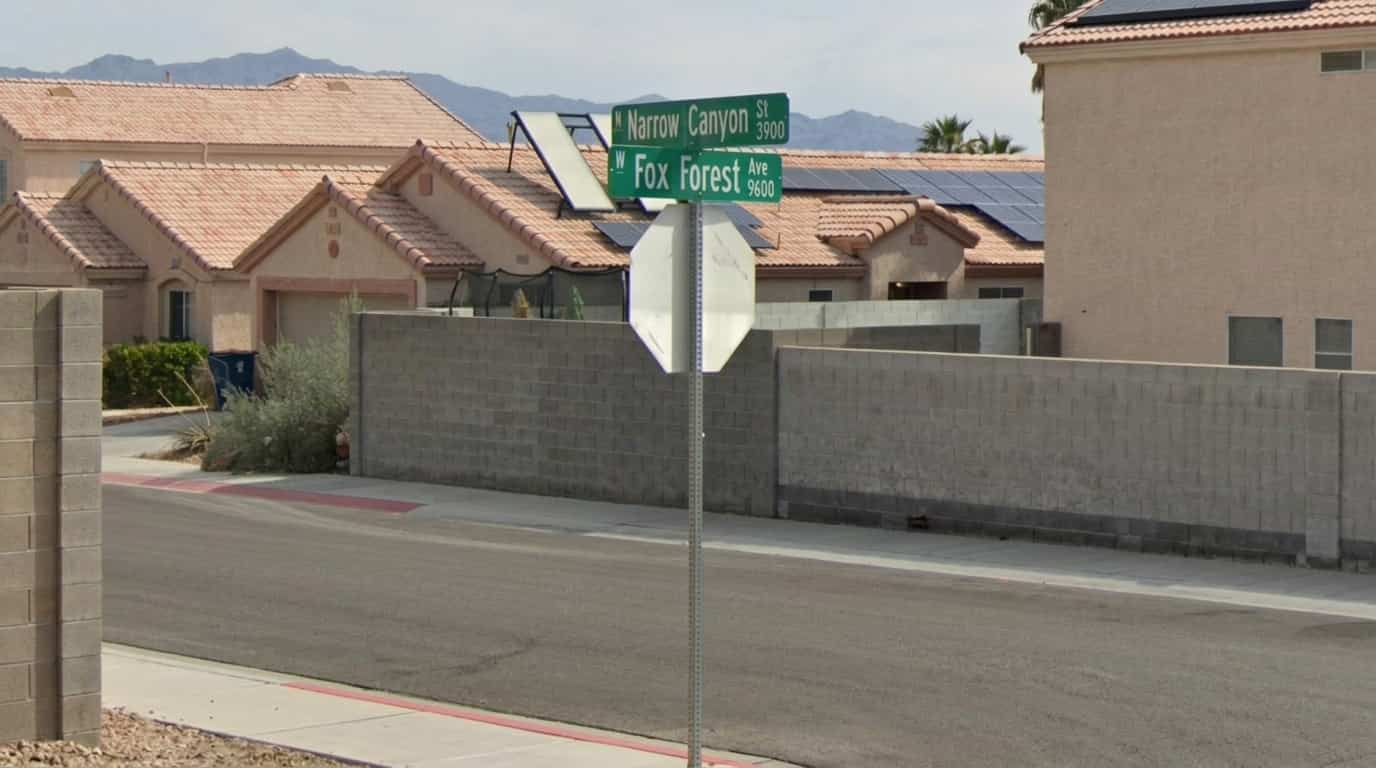
According to a release from the Las Vegas Metropolitan Police Department, a vehicle versus pedestrian collision on the afternoon of April 21, 2026 left a 91-year-old woman with life-threatening injuries on Narrow Canyon Street north of Fox Forest Avenue in Las Vegas. The release states that the driver of a 2017 Chevrolet Equinox backed out of a driveway, unaware that the pedestrian was standing behind the vehicle in the roadway waiting to cross to another residence, and that the rear of the Equinox struck the pedestrian and came to rest with the pedestrian underneath. Las Vegas Metro’s Traffic Bureau responded, and the pedestrian was transported to UMC Trauma for advanced medical care. Read the original report here.
The reported facts raise several legal questions that a Nevada personal injury lawyer would likely examine closely, including the duty a reversing driver owes to pedestrians under NRS 484B.113, the injured person’s age and the severity of her reported injuries, and the applicable insurance coverage. Nevada follows a modified comparative negligence rule under NRS 41.141, meaning an injured person may recover so long as their percentage of fault does not exceed the combined fault of the other parties, though any recovery may be reduced by their share of fault. The collision remains under investigation, and final fault findings may depend on the full Metro report and preserved video.
Reported Details and What They May Mean for a Claim
- Crash type and location: Vehicle versus pedestrian collision on Narrow Canyon Street north of Fox Forest Avenue, Las Vegas, afternoon of April 21, 2026
- Vehicle: 2017 Chevrolet Equinox, driven by Yvette Perez, 60, of Las Vegas
- Pedestrian: Socorra Jimenez, 91, of Las Vegas, reported to be standing in the roadway behind the Equinox near the edge of the driveway, waiting for a vehicle to pass before crossing to another residence
- What happened: According to the LVMPD release, the driver backed the Equinox onto the roadway; the rear of the vehicle struck the pedestrian, knocking her to the ground; the vehicle came to rest with the pedestrian underneath
- Injuries: The pedestrian was transported to UMC Trauma with life-threatening injuries; the driver reported no injuries
- Impairment: The LVMPD release states the driver showed no signs of impairment and remained at the scene
- Surveillance video: The LVMPD release notes that evidence and video surveillance informed the initial findings; the investigation is ongoing
These reported facts may be significant to a liability analysis because NRS 484B.113 generally requires a driver to yield the right-of-way to pedestrians before backing a vehicle and prohibits backing unless the movement can be made with reasonable safety. A lawyer would examine whether the driver may have failed to check adequately before reversing, and whether the pedestrian’s position in the roadway behind the vehicle was visible or reasonably foreseeable. The pedestrian’s advanced age may also bear on the damages analysis, including the nature and cost of the medical care she may require.
Key records a lawyer would typically seek in a case like this include the official LVMPD crash report, 911 and dispatch recordings, the video surveillance referenced in the police release, photographs of the driveway and surrounding roadway, witness statements from anyone who observed the incident, the pedestrian’s medical records, and any Event Data Recorder (EDR) data from the Equinox. The crash report diagram may help show the position of the vehicle and pedestrian at the time of impact, which could be important to any fault analysis. Surveillance footage is often overwritten quickly, so a lawyer would act promptly to preserve it.
Preliminary news reports may not contain final police findings. A lawyer would seek the official Las Vegas Metro crash report for more complete details.
Legal Issues in Backing Accidents and Pedestrian Crashes Under Nevada Law
Investigators will determine the exact cause of this crash. The following is a general overview of how Nevada law may apply to this type of accident.
Under NRS 484B.113, a driver may not back a vehicle unless the movement can be made with reasonable safety and without interfering with other traffic. The statute further provides that a driver must in every case yield the right-of-way to moving traffic and pedestrians. A violation of this statute, if established by the evidence, may support a negligence per se argument, meaning a lawyer could argue that the violation itself constitutes a breach of the legal duty owed to the pedestrian. A lawyer would examine the surveillance video, the driveway layout, sightlines from the driver’s seat, and any witness observations to evaluate whether the backing movement met the statutory standard.
Separately, NRS 484B.280 requires drivers to exercise due care to avoid collisions with pedestrians in all circumstances. A lawyer would also examine whether any general duty-of-care issues may apply beyond the specific backing statute, for example whether the driver had a clear view of the area behind the vehicle before reversing. The pedestrian’s position in the roadway, and whether she may have been visible to a reasonably attentive driver, would likely be examined closely by both sides.
Nevada’s modified comparative negligence rule under NRS 41.141 may also be relevant. If there is any suggestion that the pedestrian shared some responsibility, for example by standing in the roadway at a location where she may not have been clearly visible, a lawyer would examine how fault might be apportioned. Under this rule, an injured person may still recover so long as their fault does not exceed the combined fault of the other parties, but any recovery may be reduced by their share of fault. The age and mobility of the injured pedestrian may also factor into that analysis in ways a lawyer would assess carefully.
Under NRS 11.190(4)(e), personal injury claims from car accidents in Nevada generally have a two-year deadline from the date of the crash. Missing that deadline may permanently bar the claim. For a 91-year-old pedestrian with reported life-threatening injuries, prompt action to preserve evidence and evaluate available coverage may be particularly important.
How a Lawyer May Investigate a Backing Accident in Las Vegas
Serious injury crashes usually require a fast, thorough legal investigation.
- Obtain the official LVMPD crash report. The report may contain the responding officer’s observations, a scene diagram, witness contact information, and any preliminary findings on contributing factors. This is often the first priority because it provides the factual foundation for any subsequent legal strategy.
- Preserve the surveillance video referenced in the police release. The LVMPD statement indicates video surveillance was part of the initial investigation. A lawyer would act immediately to send a preservation letter to any property owner or business that may hold footage, because surveillance recordings are often overwritten within days.
- Obtain Event Data Recorder (EDR) data from the Chevrolet Equinox. Many modern vehicles record speed, braking, and steering inputs in the moments before a crash. A lawyer would issue a spoliation letter to prevent the vehicle from being repaired or transferred before that data is extracted.
- Photograph and document the driveway and surrounding roadway. The layout, sightlines from the driver’s seat, any obstructions, and road markings near the driveway may all bear on whether the backing maneuver was reasonably safe under the reported circumstances.
- Interview witnesses promptly. Witness memories can fade quickly. Anyone who observed the collision from the street or from a nearby property may have information relevant to the positioning of the pedestrian and whether the driver could have seen her before reversing.
- Review all applicable insurance coverage. A lawyer would identify the at-fault driver’s auto liability policy, review applicable policy limits, and evaluate whether the injured pedestrian may have access to additional coverage, including any uninsured or underinsured motorist (UM/UIM) coverage under NRS 690B.020 through her own policy or a household member’s policy.
Using this evidence, a lawyer would assess liability under NRS 484B.113 and NRS 484B.280, address any comparative-fault arguments the defense may raise, and identify all available insurance coverage. The life-threatening nature of the reported injuries suggests the damages at issue may be substantial, making thorough evidence preservation and coverage identification particularly important from the outset.
Based on the reported facts, a lawyer may evaluate a negligence claim on behalf of the injured pedestrian. The potential damages in a case involving life-threatening injuries to an elderly person may include emergency and ongoing medical expenses, rehabilitation costs, pain and suffering, and reduced quality of life. Because no impairment or hit-and-run conduct was reported, punitive damages would not typically be part of the initial analysis unless later-developed facts indicate otherwise.
What to Know After a Serious Pedestrian Accident in Nevada
Anyone injured in a crash like this, or a family member supporting them, should seek medical attention as quickly as possible. Even where injuries are apparent at the scene, thorough medical documentation from the date of the crash forward may be important to any future claim. It is generally advisable not to give recorded statements to insurance adjusters before speaking with an attorney, as early statements can be used to limit or dispute a claim later.
Nevada’s statute of limitations means injured people typically have two years from the date of the crash to file a personal injury claim under NRS 11.190. Missing that deadline may permanently bar recovery. An attorney may help identify all potentially liable parties, send preservation letters for critical evidence before it is lost, and evaluate every insurance policy that may provide coverage, including UM/UIM coverage that may apply even when policy limits are disputed or contested.
Serious crashes can result in medical costs, lost capacity, and lasting physical and emotional impacts that extend well beyond the initial hospitalization. Fully documenting those losses from the date of the crash forward, with consistent medical records and other supporting evidence, may be important to any claim for compensation. For a pedestrian of advanced age who has sustained life-threatening injuries, the long-term care needs involved may be significant, and a lawyer would work to ensure those potential future costs are reflected in any damages analysis.
Seeking Legal Help After a Las Vegas Pedestrian Accident
People injured in Nevada pedestrian accidents, including crashes involving backing vehicles in residential driveways, may have legal options worth evaluating even when the circumstances are not immediately clear-cut. In cases like the one described, questions of driver duty, visibility, and insurance coverage can benefit from early legal review. Evidence including surveillance footage, the official crash report, and vehicle data can disappear or become unavailable quickly.
If you or a family member were involved in a similar accident in Las Vegas or Clark County, Nevada law may allow you to pursue a personal injury claim. Speaking with a qualified Nevada personal injury attorney may be an important early step, particularly given evidence-preservation deadlines and the applicable statute of limitations.
The information in this article reflects laws and facts reported as of the date of publication. Nevada law may change. This article is for general informational purposes only and does not constitute legal advice. No attorney-client relationship is created by reading or sharing this content. If you have been injured in an accident, consult a qualified Nevada attorney for advice specific to your situation.