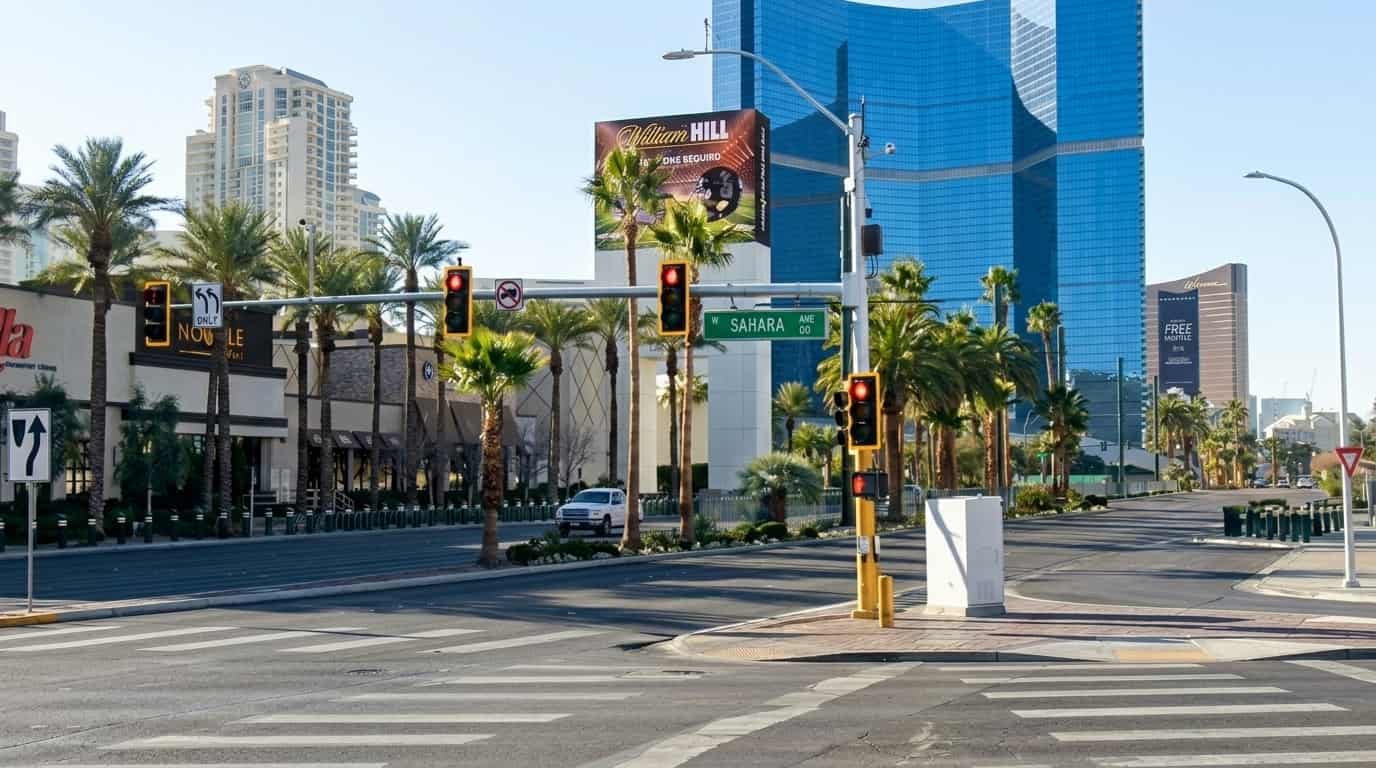
According to the Las Vegas Metropolitan Police Department, a pedestrian was struck and seriously injured on the night of April 25, 2026, on West Sahara Avenue west of South Las Vegas Boulevard. Police reported that a grey 2014 Ram 2500 failed to maintain its travel lane after making a left turn from northbound Las Vegas Boulevard onto westbound Sahara Avenue, causing the truck’s right wheels to ride up onto the north sidewalk. The right front of the Ram reportedly struck a bus shelter approximately 200 feet west of the intersection, where a 28-year-old woman from Jamaica, New York was located. The driver, 38-year-old Dario Nunez Jr. of Las Vegas, was later located north of the scene, displayed signs of impairment, and was placed under arrest on DUI and hit-and-run related charges.
Based on the reported facts, a lawyer evaluating this Las Vegas pedestrian accident would likely focus on roadway departure, alleged impairment, the hit-and-run, and the severity of the pedestrian’s injuries when assessing possible liability, available insurance coverage, and damages. Nevada follows a modified comparative negligence rule under NRS 41.141, meaning an injured person may generally recover so long as their fault is not greater than that of the parties against whom they seek recovery, though any recovery may be reduced by their percentage of fault. The collision remains under investigation, and final fault findings may depend on the full Metro report and preserved video. Read the original report here.
Reported Details and What They May Mean for a Claim
- Vehicle versus pedestrian hit-and-run on West Sahara Avenue, west of South Las Vegas Boulevard, Las Vegas, on the night of April 25, 2026.
- According to Metro, the 2014 Ram 2500 failed to maintain its travel lane after turning left from northbound Las Vegas Boulevard, went onto the north sidewalk, and struck a bus shelter where the pedestrian was standing.
- The pedestrian was projected westbound from the shelter onto the roadway and was transported to UMC Trauma with potentially life-threatening injuries.
- The driver left the scene westbound on Sahara Avenue and was later located north of the collision; Metro reported he displayed signs of impairment and was arrested on DUI and hit-and-run related charges.
- The driver was reported as uninjured; the pedestrian’s age and out-of-state residency (Jamaica, New York) were noted in Metro’s release.
These reported facts may carry significant weight in a civil liability analysis. A lawyer would examine whether the truck’s reported lane departure, the alleged impairment, and the failure to remain at the scene each factor into the liability picture, and would also consider how the pedestrian’s out-of-state status may affect available insurance, medical lien issues, and the practical handling of any claim brought under Nevada law.
Key records in a case like this would likely include the official LVMPD crash report and any follow-up investigative materials, body-worn camera or dispatch recordings if available, traffic or business surveillance footage from the area, scene photographs, vehicle damage documentation, medical records and treatment records for the injured pedestrian, and any event data recorded by the Ram 2500’s onboard systems. Police report diagrams may help establish where the truck left the roadway, how far it traveled on the sidewalk, and the precise point of impact with the shelter, all of which may be important to a liability assessment.
Nevada Law and the Legal Issues This Crash May Raise
Investigators will determine the exact cause of this crash. The following is a general overview of how Nevada law may apply to this type of pedestrian hit-and-run accident involving an alleged DUI.
Under Nevada law, drivers generally owe a duty of due care toward pedestrians, and NRS 484B.280 addresses pedestrian right-of-way in certain contexts. A lawyer would examine whether the reported lane departure, the truck’s movement onto the sidewalk, and any impairment may be relevant to a duty-of-care analysis, while also reviewing whether any conduct by the pedestrian could factor into a comparative-fault argument under NRS 41.141.
Because Metro reported a DUI arrest, Nevada’s prohibition on driving under the influence under NRS 484C.110 may become relevant evidence in any civil case, though the civil analysis would still depend on the developed record. Under NRS 42.005, punitive damages may be available when a driver acts with oppression, fraud, or malice; DUI-related conduct may meet that standard in some cases, depending on later-developed facts, though it is a high bar. A lawyer would also examine whether the reported hit-and-run conduct under NRS 484E.010 creates additional exposure in the civil proceeding.
Nevada law requires auto insurers to offer uninsured and underinsured motorist coverage under NRS 690B.020. In a hit-and-run case where the driver’s liability coverage may be disputed or insufficient, the injured pedestrian’s own UM/UIM coverage, or coverage available through a household member’s policy, may become a key recovery avenue. A lawyer would review all policies that may apply, because identifying available coverage early can affect both strategy and evidence-preservation decisions.
The pedestrian’s out-of-state residency may also raise practical questions. A lawyer would need to assess whether any auto policy issued in New York or another state could extend UM/UIM protections, and how Nevada’s jurisdiction and substantive law interact with policies issued outside the state. These cross-state coverage questions are not automatic and require careful policy-by-policy review.
How a Lawyer May Investigate This Case
Serious injury crashes involving pedestrians usually require a fast, thorough legal investigation.
- Obtain the official LVMPD crash report early. The report may contain the responding officer’s diagram, witness contacts, citations issued, and observations about road position and impairment. Details that can be important before the investigation closes.
- Preserve surveillance footage without delay. The stretch of Sahara Avenue near Las Vegas Boulevard is a heavily trafficked commercial corridor. Traffic cameras, business exterior cameras, and transit-related footage may exist, but are often overwritten within days. A preservation letter should go out promptly.
- Secure the vehicle’s event data recorder (EDR). Many 2014-era trucks log speed, braking, steering inputs, and throttle position in the seconds before impact. A spoliation letter to preserve this data is a standard early step before the vehicle is repaired, transferred, or disposed of.
- Track the related criminal case. Charging documents, probable-cause materials, and any later plea or conviction may become relevant to the civil case. A criminal conviction may be introduced as evidence in civil proceedings, and the timing of the civil filing may need to account for parallel criminal proceedings.
- Document the full scope of the pedestrian’s injuries and losses. In a case involving potentially life-threatening injuries, a lawyer would work with medical providers and, where appropriate, expert witnesses to document treatment costs, projected future care needs, lost income, and the functional impact on daily life, all of which may bear on the damages analysis.
- Identify all potentially available coverage. Beyond the driver’s personal liability coverage, a lawyer would examine whether the pedestrian holds or qualifies under any UM/UIM policy, whether a household member’s policy may apply, and whether the driver’s insurer may raise any defenses to coverage based on the reported criminal conduct.
Taken together, this evidence may help a lawyer assess the liability picture, address any comparative-fault arguments, and establish the full damages the injured pedestrian may have sustained. Where criminal records overlap with the civil case, they can also provide independent support for key facts that might otherwise require costly expert testimony.
What to Know After a Serious Pedestrian Accident in Nevada
For anyone injured in a crash like this one, prompt medical attention is a practical and legal priority. Some injuries are not immediately apparent, and a documented record of care from the earliest possible date may be important to any later claim. It is also generally advisable not to give recorded statements to insurance adjusters before speaking with an attorney, particularly in cases involving alleged criminal conduct where the insurer’s coverage position may be contested.
Under NRS 11.190(4)(e), personal injury claims arising from vehicle crashes in Nevada generally must be filed within two years of the date of the crash. Missing that deadline may permanently bar recovery, regardless of how strong the underlying facts may be. In a case like this one, where evidence can disappear quickly and a criminal case may be moving in parallel, early legal review tends to matter more, not less.
Serious pedestrian injuries often involve ongoing medical costs, lost income, reduced earning capacity, and lasting physical effects. Documenting those losses thoroughly from the date of the crash forward may make a meaningful difference to any claim for compensation.
Nevada Legal Resources for Pedestrian Accident Victims
People injured in pedestrian accidents in Las Vegas or Clark County, Nevada, may have legal options worth evaluating, even when the investigation is still ongoing or insurance coverage is disputed. In a case involving a reported DUI arrest, a hit-and-run, and potentially life-threatening injuries, the most important early questions often involve preserving video and physical evidence, identifying all available coverage, and understanding how Nevada negligence and UM/UIM rules may apply to the specific facts.
If you or a family member were involved in a similar accident in Las Vegas or Clark County, Nevada law may allow you to pursue a personal injury claim. Evidence, including surveillance footage, the official crash report, and criminal case records where applicable, can disappear quickly. Speaking with a qualified Nevada personal injury attorney may be an important early step.
The information in this article reflects laws and facts reported as of the date of publication. Nevada law may change. This article is for general informational purposes only and does not constitute legal advice. No attorney-client relationship is created by reading or sharing this content. If you have been injured in an accident, consult a qualified Nevada attorney for advice specific to your situation.