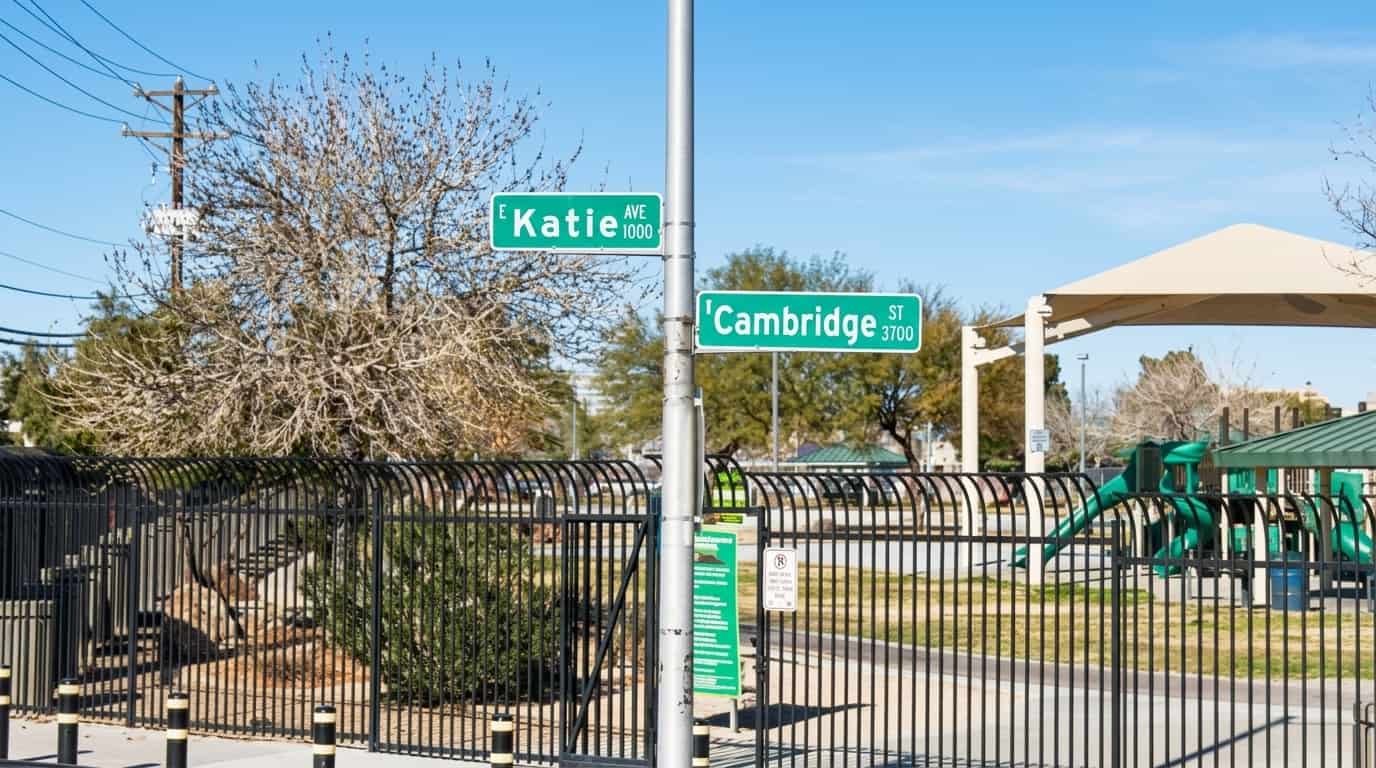
In the early morning hours of May 20, 2026, Las Vegas Metropolitan Police Department (LVMPD) officers responded to reports of a stabbing at an apartment complex in the 3800 block of Cambridge Street. According to LVMPD, a verbal altercation between two groups of individuals escalated into a physical confrontation, during which a male individual reportedly produced a knife and stabbed the victim. The victim was transported to a local hospital where he was later pronounced deceased. The individual police identified, 43-year-old Vincent Rodriguez, remained at the scene and was taken into custody without incident. Read the original report here.
Under Nevada law, the reported circumstances may carry serious criminal consequences. Rodriguez was booked into the Clark County Detention Center on a charge of Open Murder, as reported by LVMPD. Formal charges are ultimately determined by the district attorney’s office, and those charges may differ from what police initially reported. The investigation remains ongoing, and the full facts may not yet be publicly known.
Reported Details and What They May Mean Under Nevada Law
- Incident type: Fatal stabbing at an apartment complex in the 3800 block of Cambridge Street, Las Vegas
- Time of incident: Early morning on May 20, 2026
- Weapon: A knife, as reported by LVMPD
- Injuries: One male victim suffered a stab wound and was pronounced deceased at a local hospital
- Arrest status: Vincent Rodriguez, age 43, was arrested at the scene without incident
- Charge as reported: Open Murder, as booked by LVMPD into the Clark County Detention Center
- No domestic violence designation, gang-related enhancement, or hate-crime enhancement was mentioned in the official release
- No self-defense claim was reported in the official source
These reported facts may carry significant legal implications. The involvement of a knife in a fatal altercation, combined with an Open Murder booking, signals that detectives are treating this as a potential homicide case warranting full scrutiny of intent, premeditation, and the surrounding circumstances. A defense lawyer would begin by examining whether the facts support the charge as reported, what defenses may be available, and how the evidence was gathered.
Key records that may be relevant to a defense analysis include the arrest report, 911 recordings, officer body-camera footage, witness statements, surveillance video from the apartment complex and surrounding area, and forensic evidence such as blood patterns and knife analysis. In cases involving group confrontations, independent witness accounts may be particularly important, as different participants may describe the sequence of events very differently from one another.
Preliminary police reports may not reflect final charges. A lawyer would review the official arrest report, charging documents, and any available evidence before evaluating the case.
Possible Charges in a Fatal Las Vegas Stabbing Under Nevada Law
The following is a general overview of how Nevada criminal law may apply to the type of incident described. Actual charges, if any, depend on the facts developed by investigators and prosecutors.
Open Murder Under NRS 200.030
Rodriguez was booked on a charge of Open Murder, the exact charge language reported by LVMPD. In Nevada, Open Murder under NRS 200.030 is a single charge that preserves the prosecution’s ability to argue for first or second degree at trial. The degree is not determined by the charge itself but by the evidence presented.
First-degree murder under NRS 200.030(1) may be argued at trial when the killing was willful, deliberate, and premeditated, or when it occurred during the commission of certain enumerated felonies under Nevada’s felony murder rule. Second-degree murder under NRS 200.030(2) may be argued when the killing was intentional but not premeditated, or resulted from conduct that prosecutors may argue showed a depraved indifference to human life. A first-degree murder conviction may carry life imprisonment with or without the possibility of parole; second-degree murder may carry a sentence of 25 years to life.
Manslaughter may also be considered as a lesser alternative depending on how the evidence develops. Voluntary manslaughter under NRS 200.050 may apply when a killing occurs upon sudden heat of passion arising from sufficient legal provocation. Involuntary manslaughter under NRS 200.070 may apply when a death results from an unlawful act not amounting to a felony. A defense lawyer would closely evaluate which theory, if any, the reported facts may support, and whether lesser charges are more consistent with the evidence at trial.
Deadly Weapon Enhancement
Because a knife was reportedly used, the use-of-a-deadly-weapon enhancement under NRS 193.165 may be relevant. Bladed weapons are generally considered deadly weapons under Nevada law. If the enhancement were charged and proved, it could add a consecutive prison term of 1 to 20 years on top of any underlying sentence. A lawyer would examine whether this enhancement may be added to the Open Murder charge and how to address it during pretrial negotiations or at trial.
Group Altercation and Mutual Combat Considerations
According to LVMPD, the incident reportedly arose from a verbal altercation that escalated between two groups of individuals. Nevada does not have a statute that legalizes mutual combat, but the group dynamic may be legally significant. A defense lawyer would carefully examine who was the initial aggressor, whether the reported suspect was responding to a threat, and what each party’s role was in the escalation. These questions directly affect whether any self-defense or heat-of-passion argument may be available.
Self-Defense Under Nevada Law
Although no self-defense claim was reported in the official source, Nevada law recognizes the right to use force in self-defense under NRS 200.200 and NRS 200.275. Under Nevada’s Stand Your Ground law, a person who is not the initial aggressor and has a lawful right to be in a location has no duty to retreat before using force, including deadly force, if they reasonably believe such force is necessary to prevent death or substantial bodily harm. Whether that standard may apply here would depend on facts that are not yet fully known from the official release.
A defense lawyer would examine the physical evidence, relative positions of the parties, prior communications or threats, and witness accounts to evaluate whether a self-defense argument may be legally supportable. If it applies, Stand Your Ground protections may be raised at a pretrial immunity hearing under Nevada law, potentially avoiding trial altogether.
Nevada’s Criminal Process After an Open Murder Arrest
After an arrest, a person generally appears before a judge for an initial appearance where bail may be considered under NRS 178.484. In cases involving a charge of Open Murder, bail may be denied, and the accused may remain in custody pending further proceedings. The district attorney’s office will decide what charges, if any, to file, and those charges may be different from the initial police report.
For felony charges, a preliminary hearing or grand jury proceeding may follow. Throughout this process, the accused has constitutional rights including the right to remain silent, the right to counsel, and the right to confront witnesses. Understanding the Nevada arrest process and what to expect at each stage is an important step for anyone facing this situation or supporting someone who is.
Nevada’s most serious felonies, including murder, generally carry no statute of limitations under NRS 171.085. Lesser offenses may have a 3-year limitation for felonies and 1 year for misdemeanors. A lawyer would evaluate whether limitations issues apply to any additional charges that may be considered.
Beyond incarceration, a criminal conviction in Nevada may carry significant collateral consequences including loss of firearm rights for felony convictions, immigration consequences for non-citizens, loss of professional licenses, and civil liability exposure. A lawyer would evaluate all potential consequences early in the case.
Early Defense Steps in a Nevada Fatal Stabbing Case
Criminal defense investigations move fast. The earlier a defense lawyer is involved, the more options may be available.
- Obtain and review all police and arrest records. The arrest report, officer body-camera footage, and 911 recordings may reveal inconsistencies, procedural errors, or facts favorable to the defense that are not reflected in the initial police press release.
- Preserve and review surveillance video. Apartment complexes and surrounding businesses may have footage of the incident or events leading up to it. Video can be overwritten quickly, and what it shows may not match what witnesses initially reported.
- Identify and interview witnesses independently. In a multi-person altercation, different witnesses may offer meaningfully different accounts. An independent defense interview may produce details that do not appear in police reports.
- Examine physical and forensic evidence. Wound location, depth, and number, along with any defensive injuries on the reported suspect, may be relevant to evaluating intent and the sequence of events. A defense lawyer may retain independent forensic experts where warranted.
- Evaluate any self-defense issues early. Even if a formal claim was not made at the scene, the facts of a group altercation may raise questions about who was the aggressor and whether force was used in response to a threat. Evidence preservation is time-sensitive.
- Assess constitutional issues. A lawyer would examine whether the arrest, any search, and any statements taken from the reported suspect were constitutionally obtained. Suppression of unlawfully gathered evidence may significantly affect the course of the case.
From the moment of arrest, the accused has important constitutional rights including the right to remain silent (Fifth Amendment), the right to an attorney (Sixth Amendment), and the right to be free from unreasonable searches and seizures (Fourth Amendment). A lawyer would examine whether those rights were respected throughout the investigation and arrest process.
A police press release reflects what investigators allege at an early stage. The district attorney decides what charges, if any, to file, and those charges may be different from what police initially reported. Some cases result in reduced charges; others in no charges at all. Early legal involvement may affect what the district attorney decides to pursue. For additional context, see KTNV’s coverage of this incident here.
What to Know If You or a Family Member Has Been Arrested in Nevada
The most important immediate step following any arrest is to say nothing to police without an attorney present. The right to remain silent applies from the moment of arrest, and jail calls are recorded. Contacting a criminal defense attorney as early as possible, preserving any evidence that may support the defense, and avoiding public statements about the case are all important early priorities.
After an Open Murder arrest, bail may not be offered at the initial appearance. A lawyer may argue for release or for conditions of supervision, depending on the facts and the accused’s history. Even where bail is unavailable, early attorney involvement shapes how the case is documented from the start.
A criminal conviction may affect much more than prison time. It may affect housing, employment, professional licensing, firearm rights, immigration status, and civil liability exposure. Even an arrest without a conviction may carry consequences in some contexts. Understanding the full scope of potential outcomes is an important part of early legal consultation.
Nevada Criminal Defense Legal Resources
Anyone arrested or under investigation in Nevada in connection with an incident involving a fatal altercation may have important legal rights and options worth evaluating as early as possible. The circumstances described here, including a group confrontation, a reported deadly weapon, and a charge of Open Murder, represent some of the most serious matters handled in Nevada criminal courts.
The criminal process in Nevada moves quickly, from arrest to initial appearance to charging decisions, and early legal advice may affect how a case develops. Speaking with a qualified Nevada criminal defense attorney is often an important first step for anyone facing this situation or supporting a family member who is.
The information in this article reflects laws and facts reported as of the date of publication. Nevada law may change. This article is for general informational purposes only and does not constitute legal advice. No attorney-client relationship is created by reading or sharing this content. If you or a family member has been arrested or is under investigation, consult a qualified Nevada criminal defense attorney for advice specific to your situation.