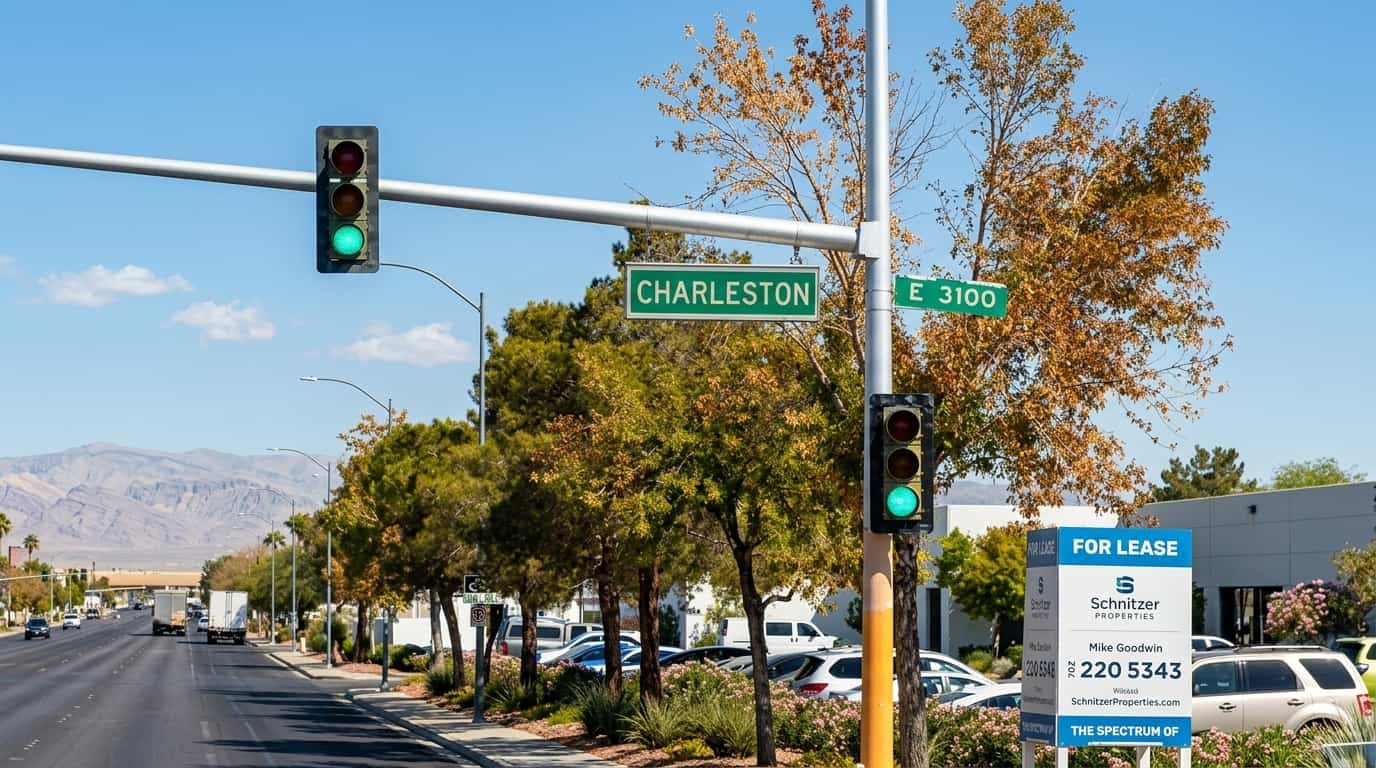
According to the Las Vegas Metropolitan Police Department, a vehicle versus pedestrian hit-and-run collision occurred in the early morning hours of May 2, 2026, at the intersection of East Charleston Boulevard and North Mojave Road in Las Vegas. A pedestrian walking a dog was crossing Charleston Boulevard in a marked crosswalk when an unknown dark-colored SUV, traveling westbound in the left lane, struck the pedestrian and fled the scene. The pedestrian was transported by arriving medical personnel to the UMC Trauma Center with life-threatening injuries. The Las Vegas Metropolitan Police Department Collision Investigation Section is handling the case.
The reported facts raise several legal questions relevant to Nevada personal injury law, including the driver’s duty of care toward a pedestrian in a crosswalk, the implications of fleeing the scene, and the comparative fault that may arise from the pedestrian’s reported signal status. Nevada follows a modified comparative negligence rule under NRS 41.141, meaning that an injured person may still recover damages even if they share some fault, as long as their percentage of fault does not exceed that of the parties against whom recovery is sought. The collision remains under investigation, and final fault findings may depend on the full Metro report and preserved video.
Read the original report here.
Reported Details and What They May Mean for a Claim
- Crash type: Vehicle versus pedestrian hit-and-run at the intersection of East Charleston Boulevard and North Mojave Road, Las Vegas
- The pedestrian was crossing Charleston Boulevard from south to north, in a marked crosswalk on the west side of the intersection, while walking a dog
- According to the LVMPD press release, the pedestrian was walking against the “Don’t Walk” traffic control signal at the time of the collision
- An unknown dark-colored SUV was traveling westbound on Charleston Boulevard in the left travel lane; the front of the SUV struck the right side of the pedestrian, projecting him westward onto the roadway
- The driver failed to remain at the scene and fled; the driver and vehicle remain unidentified
- The pedestrian sustained life-threatening injuries and was admitted to UMC Trauma Center; surveillance video and scene evidence were noted in the official report
These reported facts may be significant for evaluating both liability and comparative fault. A lawyer would examine whether the driver may have failed to exercise due care for a pedestrian in or near a crosswalk, as generally required under NRS 484B.280, regardless of the pedestrian’s signal status. At the same time, the pedestrian’s reported crossing against the “Don’t Walk” signal may be raised as a comparative fault factor under NRS 41.141, potentially reducing any recovery. The driver’s reported flight from the scene adds a distinct layer of criminal and civil complexity.
Key evidence in a case like this may include the official crash report, surveillance footage from nearby businesses or traffic cameras, 911 dispatch recordings, scene photographs, and any witnesses who observed the collision or the fleeing vehicle. The LVMPD press release notes that surveillance video was reviewed as part of the preliminary investigation, which may mean footage has already been identified and potentially preserved. Because video can be overwritten quickly, a lawyer would act promptly to send preservation letters to any business or government entity that may hold additional footage.
Preliminary reports may not contain final police findings. A lawyer would seek the official Las Vegas Metro crash report for more complete details once it becomes available from the Collision Investigation Section.
Legal Issues in a Pedestrian Hit-and-Run Under Nevada Law
Investigators will determine the exact cause of this crash. The following is a general overview of how Nevada law may apply to this type of accident.
Under NRS 484B.280, drivers generally owe a duty of due care toward pedestrians on or near a roadway, including those in or near a marked crosswalk. A lawyer would examine whether the SUV driver may have been traveling at an unsafe speed for the conditions, failed to observe the pedestrian entering the crosswalk, or was distracted at the time of the collision. The early morning hours and the reported lane position of the vehicle may also be relevant factors in assessing visibility and reaction time.
The pedestrian’s reported crossing against the “Don’t Walk” signal may trigger a comparative fault analysis. Under NRS 484B.283, pedestrians are generally required to obey traffic control signals at intersections. A lawyer would assess how a fact-finder might weigh the pedestrian’s signal status against the driver’s independent duty of care. Nevada’s modified comparative negligence rule under NRS 41.141 means that even where a pedestrian is found partly at fault, recovery may still be available as long as the pedestrian’s percentage of fault is not greater than the combined fault of the other parties.
The driver’s reported flight from the scene raises separate legal issues. Nevada law under NRS 484E.010 generally requires drivers involved in a crash resulting in bodily injury or death to stop, remain at the scene, and render aid. Fleeing the scene of a crash involving serious injury is a category B felony under Nevada law, carrying potential imprisonment of two to twenty years. While criminal exposure is a matter for prosecutors, the fact of flight may also be relevant in a civil case as evidence of consciousness of fault, depending on how the facts develop.
Because the driver remains unidentified, the injured pedestrian’s own uninsured motorist (UM) coverage may become a primary source of compensation. Nevada law under NRS 690B.020 requires insurers to offer UM/UIM coverage, and a lawyer would review any applicable auto policies that may cover the pedestrian, including personal policies and household member policies. In hit-and-run cases where the at-fault driver cannot be identified, UM coverage can be a critical recovery path that may otherwise be overlooked.
Under NRS 11.190(4)(e), personal injury claims from car accidents in Nevada generally carry a two-year deadline from the date of the crash. Missing the deadline may permanently bar any recovery, so prompt legal review is important even while the investigation is ongoing.
Under NRS 42.005, punitive damages may be available if the at-fault driver acted with oppression, fraud, or malice. Because the driver reportedly fled the scene of a crash involving life-threatening injuries, a lawyer may examine whether that conduct could support a punitive-damages argument, depending on later-developed facts. This is a high bar, and any such analysis would require a fuller evidentiary record.
How a Lawyer May Investigate This Type of Case
Serious injury crashes involving an unidentified fleeing driver usually require a fast, thorough legal investigation.
- Obtain the official Metro crash report. The Collision Investigation Section’s report may contain the responding officer’s observations, a scene diagram, witness contact information, and the officer’s preliminary assessment of contributing factors. This is often the first step in understanding the full picture.
- Preserve surveillance and traffic camera footage immediately. The LVMPD report indicates that surveillance video was reviewed at the scene. A lawyer would send preservation letters to nearby businesses, traffic management systems, and any other entities that may hold additional footage before it is overwritten.
- Identify the fleeing vehicle through debris and forensic analysis. Vehicle fragments, paint transfer, and debris left at the scene may help investigators and lawyers identify the make, model, or year of the dark-colored SUV. A forensic expert may be retained to analyze physical evidence.
- Review all potentially applicable insurance coverage. Because the driver remains unknown, a lawyer would identify every auto policy that may provide UM/UIM coverage to the injured pedestrian, including personal policies and any household member coverage under NRS 690B.020.
- Interview witnesses and review 911 records. Any witnesses to the collision or the vehicle’s direction of travel after impact may provide leads. Dispatch recordings may also help establish a timeline and document the scene conditions at the time of the crash.
- Preserve and document medical records from the outset. Life-threatening injuries may involve multiple surgeries, extended hospitalization, and long-term rehabilitation. A full accounting of medical costs, lost income, and other damages should begin from the date of the crash forward.
A lawyer would use this evidence to assess the driver’s duty of care, address any comparative-fault arguments related to the pedestrian’s signal status, identify all available insurance coverage, and document the full scope of the pedestrian’s injuries and losses. In hit-and-run cases involving unidentified drivers, the investigation into both the vehicle’s identity and the available coverage often proceeds in parallel.
Potential claims may include negligence based on the driver’s duty of care under NRS 484B.280, and possibly a punitive-damages analysis under NRS 42.005 if the driver is later identified and the facts of the flight support that standard, depending on later-developed facts.
What to Know After a Serious Pedestrian Accident in Nevada
Anyone injured in a pedestrian collision in Las Vegas should seek medical attention promptly, even if some injuries are not immediately apparent. Documented medical care from the earliest possible date may be important to any future claim. It is generally advisable to avoid giving recorded statements to insurance adjusters before speaking with an attorney, and to preserve all available evidence, including photos of the scene, clothing, and any injuries.
Nevada’s statute of limitations means that injured people may have a limited window to file a personal injury claim, often two years from the date of the crash under NRS 11.190. An attorney may help identify potentially liable parties, send evidence preservation letters before footage and records are lost, and evaluate available insurance coverage, including UM/UIM policies that may apply even when the at-fault driver is uninsured or cannot be identified.
Pedestrian crashes involving life-threatening injuries can produce long-term medical costs, lost income, reduced earning capacity, and lasting physical and emotional impacts. Documenting these losses fully from the date of the crash forward may be important to any claim for compensation.
Nevada Personal Injury Legal Resources
People injured in pedestrian accidents in Las Vegas or Clark County may have legal options worth evaluating, even when the at-fault driver has not been identified and fault is disputed. Hit-and-run cases involving life-threatening injuries present specific legal challenges, including the need to quickly identify insurance coverage and preserve evidence before it disappears. Speaking with a qualified Nevada personal injury attorney may be an important early step, particularly given evidence-preservation deadlines and the two-year statute of limitations for personal injury claims.
The information in this article reflects laws and facts reported as of the date of publication. Nevada law may change. This article is for general informational purposes only and does not constitute legal advice. No attorney-client relationship is created by reading or sharing this content. If you have been injured in an accident, consult a qualified Nevada attorney for advice specific to your situation.