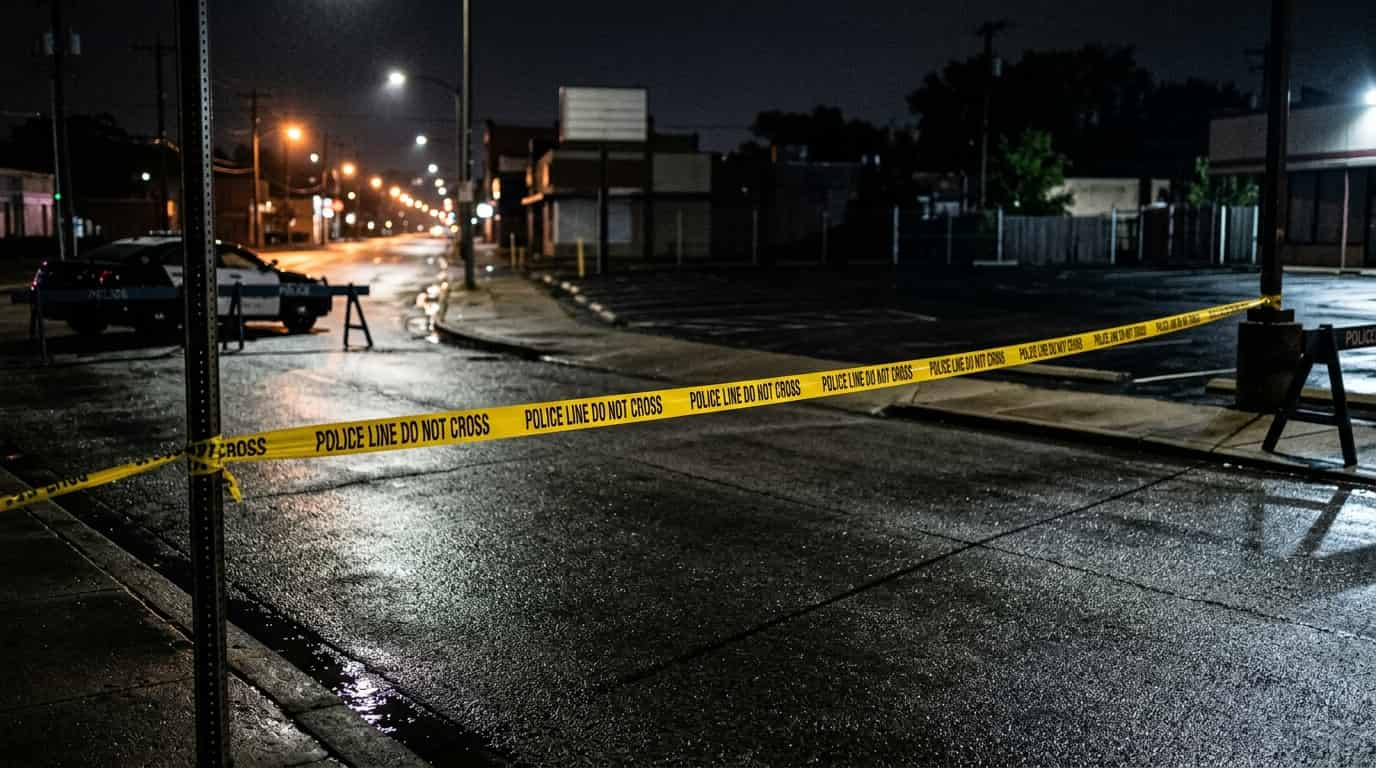
On the evening of April 10, officers with the Las Vegas Metropolitan Police Department responded to reports of a shooting in the 5700 block of Missouri Avenue, near Boulder Highway, in the East Valley. According to LVMPD, patrol officers arrived and located a male inside a vehicle that had collided with a building. The individual was suffering from multiple gunshot wounds and was pronounced deceased at the scene by medical personnel. No arrests had been announced as of the time of this report.
According to LVMPD, detectives learned that three male suspects approached the victim while he was sitting in his vehicle. A brief interaction occurred, and at some point, one of the suspects reportedly began to shoot at the victim, who fled in his car before crashing into a nearby structure. The suspects fled prior to police arriving. Depending on how the investigation develops, the reported facts may bring several serious charges under Nevada criminal law. The investigation remains ongoing, and the full facts may not yet be publicly known.
Read the original report here.
Reported Details and What They May Mean Under Nevada Law
- Incident type: Fatal shooting, homicide investigation
- Location: 5700 block of Missouri Avenue, near Boulder Highway, East Valley, Las Vegas
- Date and time: The evening of April 10, 2026, at approximately 6:29 p.m.
- Victim: One adult male, pronounced deceased at the scene from multiple gunshot wounds
- Suspects: Three male suspects reported; all fled prior to police arrival
- Weapon: Firearm (type and caliber not reported)
- Arrest status: No arrests announced as of the time of this report; investigation led by LVMPD Homicide Section
- Decedent identification: Pending through the Clark County Coroner’s Office
Preliminary police reports may not reflect final charges. A lawyer would review the official arrest report, charging documents, and any available evidence before evaluating the case.
These reported facts may be legally significant in several ways. The involvement of three suspects approaching a victim, followed by a shooting, may raise questions about coordinated conduct, shared intent, and potential liability under Nevada’s aiding and abetting framework. A lawyer would examine what role each individual allegedly played, whether their participation was knowing, and how the law would treat each person differently depending on the evidence developed by investigators.
Important evidence in a case like this may include: 911 recordings, LVMPD officer body-camera footage, surveillance video from nearby businesses and residences along Missouri Avenue and Boulder Highway, ballistics and forensic evidence, witness statements, cell phone records, and vehicle data. Surveillance footage in particular can be overwritten quickly, and its contents may either support or contradict witness accounts of what happened during and after the alleged confrontation.
Possible Charges in a Las Vegas Fatal Shooting Under Nevada Law
The following is a general overview of how Nevada criminal law may apply to the type of incident described. Actual charges, if any, depend on the facts developed by investigators and prosecutors.
Homicide Charges
A fatal shooting may result in a homicide charge. Under NRS 200.030, Nevada divides murder into first and second degree. First-degree murder may be charged when the killing was willful, deliberate, and premeditated, or when it occurred during the commission of certain enumerated felonies under Nevada’s felony murder rule. Second-degree murder may be charged when the killing was intentional but not premeditated, or when it resulted from conduct showing a depraved indifference to human life.
Manslaughter may be charged instead if the killing was not intentional. Voluntary manslaughter under NRS 200.050 may apply when a killing occurred upon sudden heat of passion arising from sufficient provocation. Involuntary manslaughter under NRS 200.070 may apply when a death resulted from a lawful act performed without due caution, or an unlawful act not amounting to a felony. A lawyer would carefully examine the evidence of intent, the sequence of events, and whether the facts may support a lesser charge.
In Nevada, prosecutors may charge “Open Murder” under NRS 200.030, which preserves the option to argue for first or second degree at trial. A first-degree murder conviction may carry a sentence of life with or without the possibility of parole, or in cases where special circumstances are alleged under NRS 200.033, potentially the death penalty. Second-degree murder may carry a sentence of 25 years to life.
Felony Murder and Multiple Suspects
If the facts indicate the shooting may have occurred during the commission of another enumerated felony, prosecutors may consider Nevada’s felony murder rule under NRS 200.030. Under this framework, a death occurring during the commission of certain felonies may support a first-degree murder charge even without proof of a specific intent to kill. A lawyer would examine whether any alleged underlying felony is among those enumerated, and what each suspect’s participation may have been.
When multiple suspects are involved, Nevada’s aiding and abetting statute under NRS 195.020 may be relevant. A person who aids, abets, counsels, or encourages another in the commission of a crime may be treated as a principal under Nevada law, potentially facing the same charges as the person who allegedly carried out the shooting. A lawyer would examine what each individual allegedly did, said, or knew in order to assess whether aiding and abetting liability may apply to each person separately.
Use of a Deadly Weapon Enhancement
Under NRS 193.165, the use of a deadly weapon in the commission of a felony may result in an additional consecutive prison term of 1 to 20 years. In the context of a fatal shooting, a lawyer would evaluate whether this enhancement may be charged and how it might interact with the primary homicide charge. The enhancement is separate from the underlying offense and may add significant time to any sentence imposed.
Prohibited Person in Possession
If any of the reported suspects were legally prohibited from possessing a firearm, a separate charge under NRS 202.360 may apply. Being a convicted felon, a subject of certain protective orders, or otherwise prohibited from firearm possession under state or federal law may result in a category B felony charge independently of any violence-related charge. A lawyer would review each individual’s background to determine whether this charge may be a factor.
Nevada’s Criminal Process
After an arrest, a person may appear before a judge for an initial appearance where bail may be set under NRS 178.484. Charges may be filed by the Clark County District Attorney’s office, who decides what to charge and those charges may differ from what the initial police investigation reflects. A preliminary hearing or grand jury may follow for felony charges. Throughout this process, the accused has constitutional rights including the right to remain silent, the right to counsel, and the right to confront witnesses.
Nevada criminal convictions may carry collateral consequences beyond imprisonment, including loss of firearm rights for felony convictions, immigration consequences for non-citizens, loss of professional licenses, and potential civil liability exposure. A lawyer would evaluate the full scope of potential consequences at the earliest stage possible.
Most serious felonies in Nevada, including murder and category A or B felonies, have no statute of limitations or long ones under NRS 171.085. A lawyer would examine whether any limitations issues apply to specific charges in the case.
How a Defense Lawyer Approaches a Las Vegas Homicide Case
Criminal defense investigations move fast — the earlier a defense lawyer is involved, the more options may be available.
- Obtain and review all police and arrest records. The arrest report, officer body-camera footage, and 911 recordings may reveal inconsistencies, procedural errors, or facts favorable to the defense that are not reflected in early news reports or the initial police press release.
- Preserve and review surveillance video immediately. Businesses and residences along Missouri Avenue and the nearby Boulder Highway corridor may have recorded footage of the incident and the movements of those involved. Video can be overwritten quickly, and what it shows may not match initial witness reports.
- Identify and independently interview witnesses. Police witness statements reflect one perspective. A defense lawyer’s independent interviews may produce different accounts or reveal bias, prior relationships between parties, or important inconsistencies.
- Examine physical and forensic evidence. Ballistics analysis, wound location and number, blood-spatter patterns, DNA, and vehicle damage may support the defense version of events or contradict the prosecution’s theory. A defense lawyer would retain independent forensic experts where the evidence warrants.
- Assess the aiding and abetting allegations for each suspect separately. With three individuals reportedly involved, a lawyer would carefully analyze what evidence connects each person to the alleged shooting, what each person’s role may have been, and whether the facts legally support applying the same charge to all three.
- Assess constitutional issues. A lawyer would examine whether any search, seizure, or arrest was conducted lawfully under the Fourth Amendment, whether Miranda rights were properly administered, and whether any statements taken from the reported suspects were constitutionally obtained. Suppression of unlawfully obtained evidence may significantly affect the case.
From the moment of arrest or detention, the accused has important constitutional rights including the right to remain silent under the Fifth Amendment, the right to an attorney under the Sixth Amendment, and the right to be free from unreasonable searches and seizures under the Fourth Amendment. A lawyer would examine whether those rights were respected throughout the investigation and at each point of contact with law enforcement.
A police press release reflects what investigators allege at an early stage of an investigation. The Clark County District Attorney’s office decides what charges, if any, to file, and those charges may be different from what police initially reported. Some cases result in reduced charges; others in no charges at all. A lawyer’s early involvement may affect what the DA decides to pursue and on what timeline.
What to Know If You or a Family Member Is Connected to This Investigation
If you or someone you know has been contacted by police in connection with this incident, or believes they may be a person of interest, certain immediate steps may matter significantly. The most important is to say nothing to police without a lawyer present. The right to remain silent applies from the first moment of contact with law enforcement, not only after a formal arrest. Do not discuss the case on the phone from jail or detention, as calls are typically recorded and may be used as evidence.
After an arrest, a person will generally appear before a judge for an initial appearance where bail may be set under NRS 178.484. Bail determinations may consider the severity of the charge, the individual’s criminal history, community ties, and flight risk. In cases involving first-degree murder charges, the court may decline to offer bail. A defense lawyer may argue for reduced bail or release conditions at the initial appearance and in subsequent proceedings.
A criminal conviction in Nevada — particularly for murder or a related category A felony — may affect far more than prison time alone. Potential consequences include the permanent loss of firearm rights, immigration consequences for non-citizens, loss of professional licenses, and significant civil liability exposure. Even an arrest without a conviction may have consequences in certain contexts. Understanding the full scope of potential outcomes is an important reason to seek legal advice as early as possible.
Nevada Criminal Defense Legal Resources
Anyone arrested, detained, or contacted by police in connection with a fatal shooting investigation in Las Vegas or Clark County may have legal rights and options worth understanding at the earliest possible stage. Cases involving homicide charges under Nevada law are among the most serious in the criminal justice system, and the speed of the process from initial investigation to charging decisions means that early legal involvement may significantly affect how a case develops. Speaking with a qualified Nevada criminal defense attorney is an important first step for anyone facing this situation.
The information in this article reflects laws and facts reported as of the date of publication. Nevada law may change. This article is for general informational purposes only and does not constitute legal advice. No attorney-client relationship is created by reading or sharing this content. If you or a family member has been arrested or is under investigation, consult a qualified Nevada criminal defense attorney for advice specific to your situation.