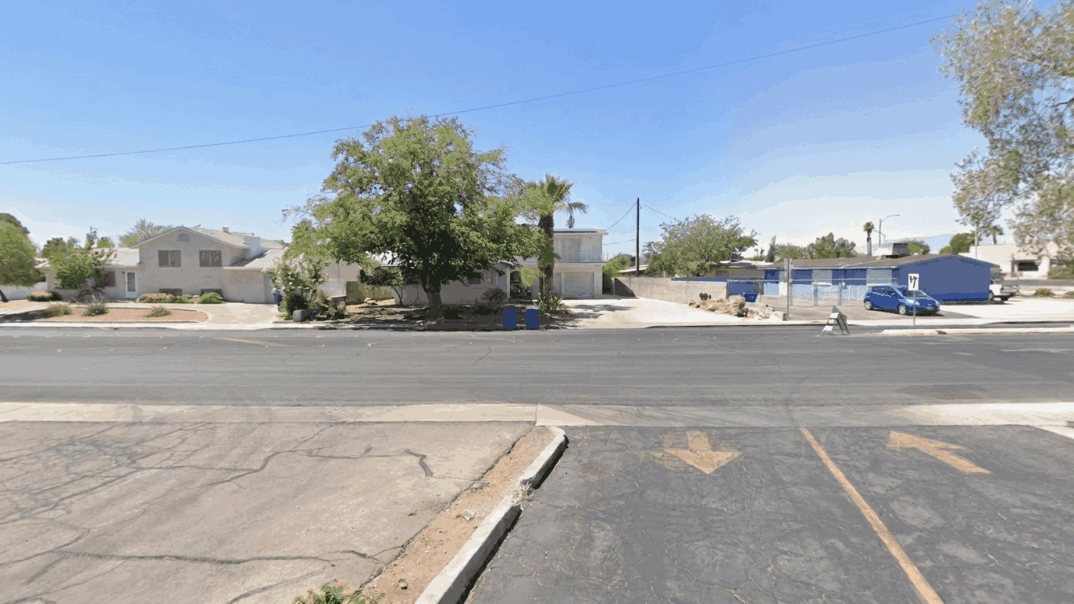
According to a Las Vegas Metropolitan Police Department press release, officers responded to reported gunfire in the 100 block of Upland Boulevard on an afternoon. Police reported finding a male with an apparent gunshot wound inside a vehicle that had collided with a tree; he was transported to a hospital and later pronounced deceased.
LVMPD identified 28-year-old Rodger Harrison as the person it detained. Police allege that Harrison grabbed property belonging to a woman selling items in the area, that the deceased confronted him, and that a physical altercation followed before a firearm was allegedly produced and discharged. Harrison was arrested and booked into the Clark County Detention Center for Open Murder, Robbery, and Carry Concealed Weapon Without a Permit.
Those allegations may raise serious issues under Nevada criminal law, but an arrest and booking do not establish guilt. The investigation remains ongoing, and the full facts may not yet be publicly known. Formal charging decisions, the available evidence, and defenses raised in court can all affect how a case proceeds. Read the original report here.
Reported Details and Legal Issues
- Location and incident: LVMPD reported gunfire and a fatal shooting in the 100 block of Upland Boulevard in Las Vegas on July 30, 2026.
- Weapon: Police stated that a firearm was allegedly produced during a physical altercation.
- Reported fatality: Officers found a male with an apparent gunshot wound in a vehicle that had collided with a tree. He was later pronounced deceased at a hospital.
- Arrest: Police reported detaining and arresting 28-year-old Rodger Harrison.
- Booked allegations: LVMPD stated that Harrison was booked for Open Murder, Robbery, and Carry Concealed Weapon Without a Permit.
These reported facts may lead investigators and prosecutors to examine the alleged taking of property, the timing and nature of the confrontation, and the use of a firearm. A defense lawyer would separately assess whether the evidence supports every required element of each booked allegation, including identification, possession, intent, causation, and whether any legally justified use of force may be at issue.
Key records may include the arrest report, 911 communications, body-camera footage, witness statements, nearby surveillance video, forensic and ballistic evidence, the firearm itself, and medical or coroner records. Those materials can help establish the sequence of events, determine what each participant did or perceived, and test whether witness accounts match objective evidence.
Open Murder Under Nevada Law
The following is a general overview of how Nevada criminal law may apply to the type of incident described. Actual charges, if any, depend on the facts developed by investigators and prosecutors.
A fatal shooting may result in an Open Murder charge under NRS 200.030. Open Murder is one charge that allows the prosecution to pursue a first-degree or second-degree murder theory at trial, depending on the evidence. Nevada law recognizes first-degree murder in circumstances including a willful, deliberate, and premeditated killing, as well as certain killings occurring during the perpetration or attempted perpetration of listed felonies, including robbery.
Second-degree murder covers other kinds of murder under the statute. Whether a first-degree, second-degree, or lesser-offense theory is supported can turn on evidence about intent, planning, the alleged robbery, the confrontation, the firearm discharge, and the entire sequence of events.
A defense attorney would review whether the State can prove the required mental state beyond a reasonable doubt. The reported physical altercation may make the context of the confrontation especially important, including testimony about who initiated force, whether there was an immediate threat, whether any force was proportional, and whether the evidence supports a lesser offense rather than the charged theory.
Robbery Allegation
Nevada defines robbery as taking personal property from another person, or in that person’s presence, against their will through force, violence, or fear of injury. The statute also covers force or fear used to obtain or retain property, overcome resistance, or facilitate escape, and classifies robbery as a category B felony.
Here, LVMPD alleged that property was grabbed from a woman selling items in the area. A lawyer would examine whether the evidence shows a taking from her person or presence, whether force or fear was used in the legally required way, whether the property was retained, and whether witness accounts or video establish the alleged conduct reliably.
The robbery allegation may also matter to the Open Murder case because Nevada’s first-degree murder statute includes killings alleged to occur during the perpetration or attempted perpetration of robbery. That does not automatically decide the degree of any offense, and the prosecution would still have to prove the necessary facts and legal relationship between the alleged robbery and death.
Concealed Weapon Charge
LVMPD also reported a booking allegation of Carry Concealed Weapon Without a Permit. Nevada law restricts carrying a concealed pistol, revolver, other firearm, dangerous or deadly weapon, or pneumatic gun, subject to statutory exceptions and Nevada’s concealed-firearm permit provisions.
The exact legal theory for that booked allegation would depend on details not stated in the release, including how the firearm was allegedly carried, whether it was concealed by ordinary observation, whether a valid permit or exception applied, and how officers located the weapon. A defense lawyer would also examine whether the search, seizure, detention, and any statements complied with constitutional protections.
Self-Defense and Evidence Review
The police release does not report that anyone claimed self-defense. Still, when a case involves a reported physical altercation before a firearm discharge, defense counsel would evaluate whether the facts could support self-defense or defense of another under Nevada law.
That review may include the immediate threat perceived by the accused, whether the accused was the original aggressor, whether deadly force was reasonably believed necessary, and whether the available physical evidence corroborates or contradicts witness accounts. Nevada’s stand your ground law can be relevant where a person was not the original aggressor, had a right to be present, and reasonably believed force was necessary to prevent imminent death or substantial bodily harm.
Even where self-defense is not ultimately supported, evidence of a sudden confrontation may remain important to intent, degree of offense, credibility, and possible lesser-offense instructions. A criminal defense attorney would preserve video and digital evidence promptly, investigate witnesses, scrutinize forensic conclusions, and carefully compare every allegation with the evidence prosecutors must prove.
What Happens After Arrest
After an arrest for allegations of this seriousness, the case may move through initial court appearances, a review of custody or bail conditions, the filing of a criminal complaint or indictment, preliminary proceedings, evidence exchange, motions, negotiations, and potentially trial. The reported booking allegations may change as prosecutors review evidence and make formal charging decisions.
A person facing a Nevada felony investigation or arrest should avoid discussing the facts with witnesses, on social media, or with investigators without legal advice. Understanding what happens after a Nevada arrest can help an accused person and family members prepare for the immediate stages of the criminal process while preserving important rights.
The information in this article reflects laws and facts reported as of the date of publication. Nevada law may change. This article is for general informational purposes only and does not constitute legal advice. No attorney-client relationship is created by reading or sharing this content. If you have been injured in an accident, consult a qualified Nevada attorney for advice specific to your situation.
Leave a Reply