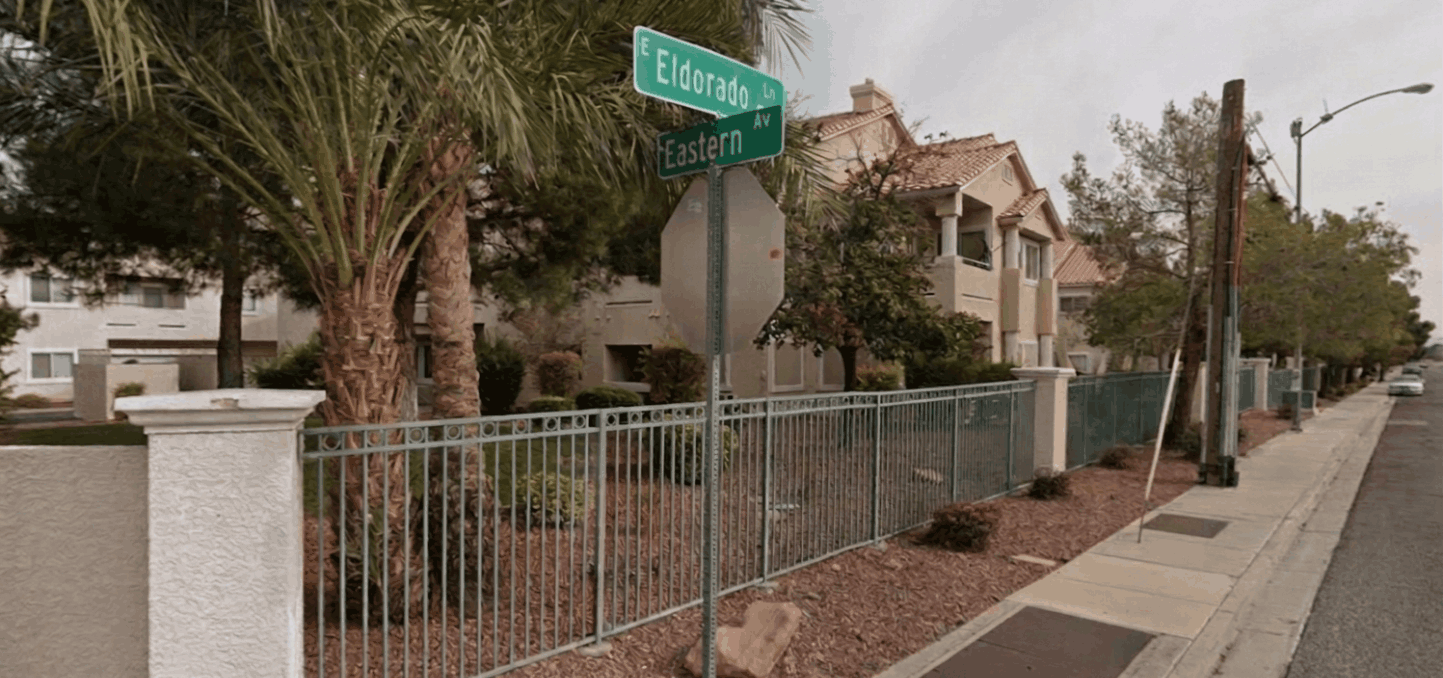
On the morning of August 16th, 2026, a single-vehicle crash on South Eastern Avenue, north of East Eldorado Lane, left a 31-year-old driver with life-threatening injuries. According to the Las Vegas Metropolitan Police Department, the man later died at Sunrise Hospital. The collision involved a 2021 Jeep Compass that struck a raised center median, crossed into oncoming lanes, hit a curb, and then struck several utility structures before coming to rest. Police say impairment is suspected.
Because this crash did not involve another driver, the legal questions it raises are different from a typical two-vehicle case. But single-vehicle, fatal, suspected-impairment crashes still raise real legal issues under Nevada law, from wrongful death claims brought by surviving family members to property-damage exposure involving public utilities. Based on these reported facts, a lawyer would examine several angles that are often overlooked when only one vehicle is involved.
Crash Overview and Why It Still Raises Legal Questions
According to the Las Vegas Metropolitan Police Department’s news release, the collision occurred in the early morning hours on South Eastern Avenue, north of East Eldorado Lane. Evidence at the scene and witness statements reportedly indicated that the Jeep Compass was traveling northbound when it failed to maintain its travel lane, striking the raised center median. The vehicle then continued over the median, crossed into southbound travel lanes, struck the west curb, and continued along the west sidewalk, hitting several Vegas Valley Water District boxes and a large NV Energy wooden power pole. LVMPD’s Collision Investigation Section is handling the case, and police say impairment is suspected in the crash.
The driver was initially reported to be in life-threatening condition after being transported to Sunrise Hospital. According to a follow-up report from the Las Vegas Review-Journal, the driver later died from his injuries. That update changes the legal framing considerably, shifting the analysis from a personal injury matter toward wrongful death and estate-related questions.
From a legal-analysis standpoint, a single-vehicle, roadway-departure crash with suspected impairment raises questions about causation, comparative fault as it may apply to any additional parties, and potential property-damage claims tied to public infrastructure. Nevada follows a modified comparative negligence rule, meaning that in cases with more than one potentially liable party, recovery may depend on how fault is divided among them. The collision remains under investigation, and final fault findings may depend on the full Metro report and any preserved video, including footage that may exist from nearby traffic or business cameras.
Read the original report here.
Reported Details and What They May Mean for a Claim
- Single-vehicle crash: a 2021 Jeep Compass traveling northbound on South Eastern Avenue, north of East Eldorado Lane
- The vehicle struck the raised center median, crossed into southbound lanes, struck the west curb, then traveled along the west sidewalk
- The Jeep struck several Vegas Valley Water District boxes and a large NV Energy wooden power pole
- The 31-year-old male driver suffered life-threatening injuries and was transported to Sunrise Hospital, where he later died according to news reports
- Impairment is suspected in the collision, according to police
- The crash remains under investigation by LVMPD’s Collision Investigation Section
Preliminary news reports may not contain final police findings. A lawyer would seek the official Las Vegas Metro crash report for more complete details, including any toxicology results, roadway conditions, and the precise sequence of the multiple impacts described in the release.
These facts may indicate a straightforward single-vehicle loss from a traffic-law standpoint, but they still carry legal weight. A lawyer would investigate whether any roadway design, lighting, signage, or maintenance issue may have contributed to the roadway departure, even where impairment is suspected as a primary factor. A lawyer would also examine whether any mechanical failure, such as a steering or tire defect, played a role, since product-liability questions can arise even in crashes that initially appear to be solely a matter of driver error.
Important evidence in a case like this often includes the police crash report, 911 and dispatch recordings, scene photographs, the vehicle’s damage diagram, any available toxicology or blood-alcohol results, and footage from nearby traffic or business cameras. Police report diagrams may help establish the exact path of the vehicle across the median and sidewalk, which can be important in reconstructing how and why the crash occurred. Because the vehicle traveled along a public sidewalk and struck utility infrastructure, a lawyer would also expect NV Energy and the Vegas Valley Water District to document their own property damage, which may become relevant if either utility pursues a claim against the driver’s estate or insurer.
What Nevada Law May Mean for a Fatal Single-Vehicle Crash
Investigators will determine the exact cause of this crash. The following is a general overview of how Nevada law may apply to this type of accident.
Suspected Impairment and Its Legal Weight
Nevada law prohibits driving under the influence of alcohol or drugs under NRS 484C.110. If police confirm impairment through toxicology testing, that finding may become significant evidence in any related civil proceeding, including a potential wrongful death claim or a property-damage claim brought by a utility company. Under NRS 42.010, Nevada law specifically allows exemplary and punitive damages in cases where an injury results from operating a vehicle after consuming alcohol or a controlled substance, though whether that standard could be met here depends entirely on facts that have not yet been confirmed. Because police have only said impairment is “suspected,” and no arrest or charge has been reported, any punitive-damages discussion would remain speculative at this stage and would depend heavily on later-developed facts.
Wrongful Death and the Driver’s Own Estate
Because the only person involved in this crash was the driver, and he reportedly died from his injuries, the most relevant civil framework may not be a traditional personal injury claim brought by a victim against an at-fault driver. Instead, a lawyer would examine whether the driver’s own dependents or estate have any basis for a claim, which typically requires identifying some other party whose negligence contributed to the crash, such as a roadway defect, a vehicle defect, or another driver whose actions are not yet reflected in the initial police account. Absent such a party, Nevada’s wrongful death statute, NRS 41.085, generally applies to claims against a party other than the decedent, so a lawyer would need to identify a distinct potentially liable party before a wrongful death claim could proceed.
Property Damage Claims by Utilities and Public Entities
The Jeep reportedly struck several Vegas Valley Water District boxes and an NV Energy power pole. Public utilities routinely pursue reimbursement for damaged infrastructure through their own claims processes or through the driver’s insurer. A lawyer representing an estate in this situation would examine what liability coverage may be available on the vehicle, since any payout could be shared among the driver’s own claims, if any exist, and third-party property claims from the utilities. Because the driver is deceased, any such property-damage claim would likely be directed at the estate or at any applicable insurance policy rather than pursued as a lawsuit against a living defendant.
Comparative Negligence Considerations
Nevada follows a modified comparative negligence rule under NRS 41.141. Generally, an injured person, or in a wrongful death context the decedent’s survivors, may recover so long as the decedent’s own negligence was not greater than the negligence of the party or parties against whom recovery is sought. In a case where the driver’s own conduct, including possible impairment, is a major factor in the crash, comparative fault analysis becomes especially significant if any other party’s negligence, such as a design defect in the roadway or a vehicle malfunction, is later identified as a contributing cause.
How a Lawyer May Investigate a Single-Vehicle Fatal Crash
Serious injury and fatal crashes usually require a fast, thorough legal investigation, even when only one vehicle is involved.
- Obtain the Las Vegas Metro crash report. This is often the first priority because it may contain the responding officer’s observations, a diagram of the vehicle’s path across the median and sidewalk, and any toxicology results tied to the suspected impairment.
- Preserve nearby traffic and business surveillance footage. Eastern Avenue is a heavily traveled corridor, and nearby businesses or traffic cameras may have captured the sequence of events. Footage is often overwritten quickly, so a lawyer would act fast by sending preservation letters to any business or agency that may have relevant recordings.
- Collect the vehicle’s Event Data Recorder (black box) data. Many modern vehicles, including the 2021 Jeep Compass involved here, record speed, braking, and steering input in the seconds before a crash. A lawyer would issue a spoliation letter to preserve this data before the vehicle is repaired, sold, or destroyed.
- Review roadway design and maintenance records. Even where impairment is suspected, a lawyer would examine whether the median, lighting, or signage in that stretch of Eastern Avenue met applicable standards, since a roadway or design issue could still be a contributing factor.
- Identify all parties with a potential financial interest in the outcome. This may include the driver’s own insurer, NV Energy, and the Vegas Valley Water District, each of which may have a stake in how liability and available coverage are ultimately resolved.
- Coordinate with an accident reconstruction expert if needed. Given the unusual path of the vehicle, across the median, into oncoming lanes, along a sidewalk, and into multiple fixed objects, a reconstruction expert may help clarify speed, timing, and whether any mechanical or roadway factor played a role alongside suspected impairment.
A lawyer would use this evidence to assess whether any party besides the deceased driver bears legal responsibility, since that finding shapes whether a wrongful death claim, an estate-related insurance claim, or simply a property-damage resolution with the utilities is the relevant path forward. Where a fatality is involved, wrongful death claims under NRS 41.085 may become relevant if a distinct, non-decedent party is later found to share responsibility for the crash, though the currently reported facts center entirely on the driver’s own vehicle and conduct.
What Families Should Know After a Fatal Single-Vehicle Crash
Families dealing with a loss like this often face both emotional and practical burdens right away. Documenting everything related to the crash, including obtaining copies of the police report once available and preserving any communications with insurers or utility companies, may become important later.
Nevada’s statute of limitations generally gives injured parties or survivors a limited window to pursue claims. Under NRS 11.190, personal injury claims typically must be filed within two years of the date of the crash, and wrongful death claims generally carry the same two-year deadline under NRS 11.190(4)(d). Missing this deadline may permanently bar recovery, even where liability might otherwise be clear.
An attorney may help families understand whether any distinct third party, beyond the deceased driver, bears legal responsibility for the crash, and may help evaluate what insurance coverage exists on the vehicle and how it might be allocated between any family claims and third-party property claims from NV Energy or the Vegas Valley Water District. Serious crashes involving fatalities also often bring administrative and probate complexities that are separate from, but related to, any civil claim, and a lawyer familiar with both areas may help families navigate the full picture.
Nevada Personal Injury Legal Resources
Fatal single-vehicle crashes like this one raise legal questions that are easy to overlook because no other driver was reportedly involved. Families of a deceased driver, as well as public utilities and property owners affected by property damage, may still have legal options worth evaluating, particularly where roadway conditions, vehicle defects, or insurance coverage questions remain unresolved. Because suspected impairment is part of the reported facts here, the ultimate toxicology findings and the full Metro investigation may significantly shape how any related legal or insurance matters are resolved.
If you or a family member were involved in a similar accident in Las Vegas or Clark County, Nevada law may allow you to pursue a personal injury or wrongful death claim depending on the facts involved. Evidence, including surveillance footage and the official crash report, can disappear or become unavailable quickly. Speaking with a qualified Nevada personal injury attorney may be an important early step.
The information in this article reflects laws and facts reported as of the date of publication. Nevada law may change. This article is for general informational purposes only and does not constitute legal advice. No attorney-client relationship is created by reading or sharing this content. If you have been injured in an accident, consult a qualified Nevada attorney for advice specific to your situation.
Leave a Reply