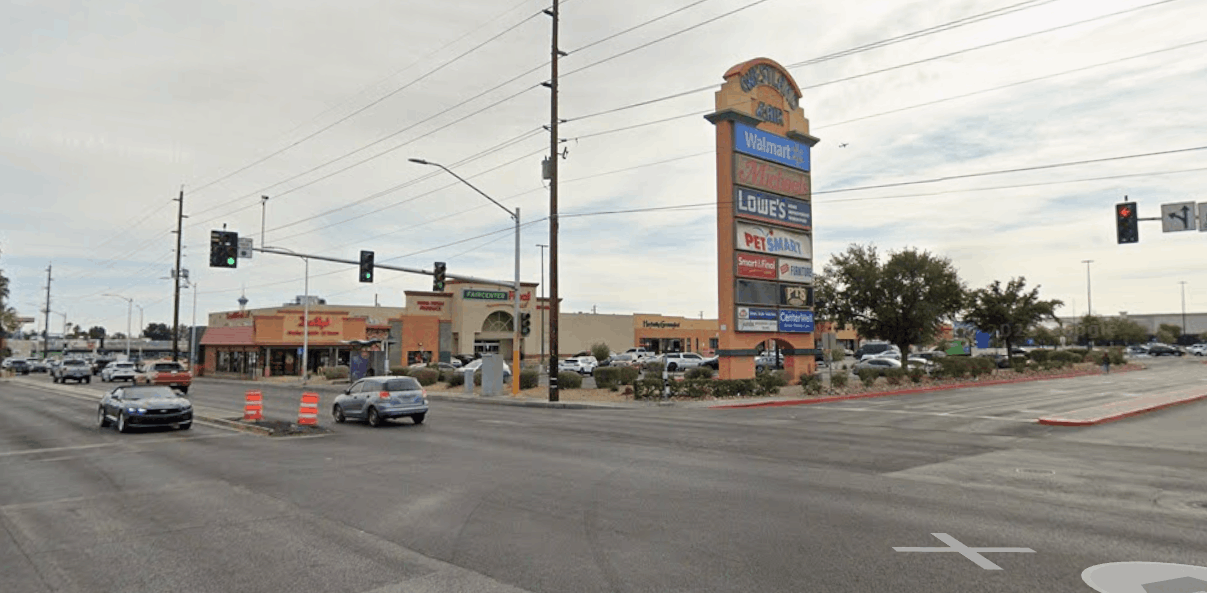
According to the Las Vegas Metropolitan Police Department, officers were dispatched on the morning of April 11, 2026, to investigate a traffic accident with injuries near West Charleston Boulevard and South Essex Drive. Police reports indicate the crash involved a black Hyundai Sonata that struck a silver minivan and then collided with a large rock and a light pole. The driver, identified as 55-year-old Harold Allen, sustained minor injuries; the passenger was transported to a nearby hospital where he was pronounced dead. According to the LVMPD press release, Allen reportedly stole the running Hyundai from a commercial shopping center in the 4500 block of West Charleston Boulevard with the passenger, who was sleeping in the vehicle at the time, still inside. Allen fled at a high rate of speed before the crash occurred.
The reported circumstances raise a number of significant legal questions under Nevada law, including wrongful death, civil liability for intentional criminal conduct, and insurance coverage for a passenger who appears to have been a lawful occupant taken without consent when the vehicle was stolen. Nevada follows a modified comparative negligence rule, which means that even in complex cases involving multiple parties, each party’s share of fault may affect the outcome of a civil claim. The collision remains under investigation, and final fault findings may depend on the full Metro report and preserved video.
Reported Details and What They May Mean for a Claim
According to the LVMPD press release and reporting by KTNV Channel 13, the following details have been reported:
- The crash occurred on the morning of April 11, 2026, near the intersection of West Charleston Boulevard and South Essex Drive in Las Vegas
- The vehicle involved was a black Hyundai Sonata; the stolen vehicle first struck a silver minivan, then continued northbound and hit a large rock and a light pole near the intersection of Charleston and Essex
- The passenger was reportedly sleeping in the vehicle when Allen allegedly entered the driver’s seat and sped away, indicating the passenger may have been a lawful occupant taken unknowingly at the time of the theft
- The passenger sustained critical injuries and was later pronounced dead at a nearby hospital; the driver, Allen, sustained only minor injuries
- The minivan also had two occupants; the driver sustained minor injuries, and the passenger was unharmed, though both were taken to the hospital as a precaution
- Allen was arrested and booked into the Clark County Detention Center on multiple felony charges, including Open Murder with a Deadly Weapon, Grand Larceny of a Motor Vehicle, and Kidnapping, 1st Degree; jail records reviewed by KTNV also indicate an Attempted Murder charge
- Allen was held on no bail following his initial court appearance; the case is being investigated by the LVMPD Homicide Section
These facts may have significant implications for both a wrongful death claim and a civil action based on intentional conduct. Because the passenger appears to have been a lawful occupant who was asleep in the vehicle at the time of the theft, a lawyer would likely assess this as a case involving little to no comparative fault on the part of the deceased. Based on these reported details, a lawyer would examine who may be liable, what insurance coverage may be available, and whether the facts support both negligence-based and intentional-tort theories of civil liability.
Key records and evidence in a case like this may include the official LVMPD crash report, 911 and dispatch recordings, surveillance footage from the shopping center parking lot and nearby businesses along West Charleston, traffic camera footage at the Charleston and Essex intersection, medical records from the hospital, vehicle damage documentation and any event data recorder (EDR) data from the Hyundai Sonata, and records from the criminal case against Allen. The police crash report may contain witness contacts, the responding officer’s observations, and a diagram of the collision sequence, making it one of the first documents a lawyer would seek. Surveillance footage from the parking lot where the vehicle was taken may also be a critical early target, as such footage is often overwritten within days.
Because the vehicle was reported stolen, a lawyer would closely review whether any liability coverage may apply to Allen as the driver. If no coverage is available or an insurer denies coverage, uninsured/underinsured motorist (UM/UIM) coverage under NRS 690B.020 may be available to the deceased’s surviving family or to the injured minivan occupants. A lawyer would review all policies that may apply, including the deceased passenger’s own UM/UIM coverage and any household policies.
What Nevada Law May Mean for a Kidnapping-Related Fatal Crash
Investigators will determine the exact cause and full legal characterization of this crash. The following is a general overview of how Nevada law may apply to this type of accident.
The threshold question a lawyer would address is how the passenger came to be in the vehicle. According to reporting from KTNV and the LVMPD press release, the passenger was reportedly sleeping in the front seat of the running Hyundai when Allen allegedly entered the vehicle and drove off. If supported by the evidence, this would suggest the passenger was a lawful occupant taken unknowingly, a position that may present one of the stronger civil-claim scenarios, because the victim may have had every right to be in the vehicle and no opportunity to exit before the theft and flight occurred. A lawyer would confirm this through witness accounts, the police narrative, and any surveillance footage.
Under NRS 200.310, Nevada law defines kidnapping in two degrees. According to the LVMPD press release, Allen was charged with Kidnapping, 1st Degree. LVMPD also reported Open Murder with a Deadly Weapon. Under NRS 200.030, when a death occurs during the commission or attempted commission of certain serious felonies, which may include kidnapping, Nevada law may treat the death as first-degree murder even without proof of a specific intent to kill. A lawyer would monitor the criminal proceedings closely because the factual findings in the criminal case may become relevant to the civil wrongful-death analysis, depending on later-developed facts. The charges as reported by police should be treated as allegations; criminal liability is not established until proven in court.
Many standard auto liability policies include exclusions for intentional criminal acts. A lawyer might expect that Allen has no available liability coverage for the victim’s injuries or death, not necessarily because no policy exists, but because an insurer may deny coverage based on intentional-act exclusions. The coverage analysis for the victim’s family may therefore focus on the victim’s own UM/UIM coverage under NRS 690B.020, any household member policies that may extend coverage, and the policy on the stolen Hyundai itself. Whether a lawful occupant present before the theft is covered under the vehicle owner’s policy is a fact-specific question that depends on the specific policy language, but a lawyer would explore that avenue alongside all others.
Because the decedent was reportedly killed in these circumstances, a wrongful death claim under NRS 41.085 may be available to the victim’s heirs, which may include a spouse, children, or parents depending on the family circumstances. Recoverable damages may include medical expenses incurred before death, funeral and burial costs, lost future income and support, and loss of companionship, among other elements, depending on how the claim is structured and the evidence developed. The general statute of limitations for wrongful death claims in Nevada is two years from the date of death under NRS 11.190(4)(d), though a lawyer would examine the current law carefully given the ongoing criminal proceedings and any tolling issues that may apply.
The reported intentional criminal conduct, including the felony charges for Open Murder with a Deadly Weapon and Kidnapping, 1st Degree, may also support a punitive damages analysis under NRS 42.005, which allows for punitive damages where a defendant is found to have acted with oppression, fraud, or malice. Depending on later-developed facts, a lawyer may examine whether that standard could be met in a civil case arising from these reported facts, though it is a high bar.
Under Nevada’s modified comparative negligence rule (NRS 41.141), an injured party may recover so long as their fault is not greater than the combined fault of the parties against whom recovery is sought. Given that the passenger was reportedly asleep and taken without knowledge or consent, comparative-fault arguments against the passenger may be difficult to sustain, but a lawyer would still address them as part of any full liability analysis.
Under NRS 11.190(4)(e), personal injury claims generally may have a two-year deadline from the date of the crash; wrongful death claims may have a two-year deadline under NRS 11.190(4)(d). Missing the deadline may permanently bar a claim. A lawyer would also note that parallel criminal proceedings may affect the civil-case timeline, and would evaluate whether to file the civil case immediately to preserve evidence and claims, or to monitor the criminal case first, a strategic decision that turns on the specific facts and urgency of evidence preservation.
The vehicle owner’s potential claims for property loss represent a separate avenue. Because the Hyundai was reportedly taken from a commercial shopping-center parking lot, a lawyer may also examine whether the property owner could face premises-liability or negligent-security issues, depending on factors such as lighting conditions, the presence of security cameras, the adequacy of security patrols, and whether prior similar incidents may have put the property owner on notice.
How a Lawyer Investigates a Kidnapping-Related Fatal Crash in Las Vegas
Serious injury and fatal crashes usually require a fast, thorough legal investigation.
- Obtain the official LVMPD crash report. This is typically the first step because it may contain witness contacts, officer observations, a collision diagram, and any preliminary fault or contributing-factor notations. Given that the LVMPD Homicide Section is leading the investigation, early outreach to preserve all reports is a priority.
- Preserve surveillance footage immediately. The shopping-center parking lot where the vehicle was reportedly stolen, and businesses along West Charleston Boulevard and near the Essex intersection, may have captured the theft, flight, and collision. Footage is often overwritten within days; a preservation letter sent promptly may prevent critical evidence from being lost.
- Identify all potentially liable parties and available insurance coverage. Beyond Allen personally, a lawyer would examine whether the stolen vehicle’s owner has a policy that may cover a lawful occupant, whether the deceased’s own UM/UIM coverage may apply, whether any household policies extend coverage, and whether the commercial property where the theft occurred may face a separate negligent-security claim.
- Retrieve event data recorder (EDR) data from the Hyundai Sonata. Many modern vehicles record speed, braking, steering input, and other data in the seconds before a crash. A spoliation letter to preserve this data should be sent before the vehicle is repaired, moved, or destroyed.
- Monitor and obtain records from the criminal proceedings. Allen’s criminal case, involving Open Murder with a Deadly Weapon, Kidnapping 1st Degree, Grand Larceny of a Motor Vehicle, and reportedly Attempted Murder, may produce charging documents, probable-cause affidavits, and witness statements that become important to the civil case. A criminal conviction, if obtained, may later be introduced as evidence in the civil proceeding.
- Work with accident reconstruction experts if needed. For a collision sequence involving a stolen vehicle, a minivan, and a fixed object, an expert may analyze skid marks, point of impact, vehicle damage patterns, and camera footage to establish how the events unfolded, which may matter both to the wrongful-death claim and to any negligent-security analysis.
A lawyer would use this evidence to establish the full liability picture, addressing comparative-fault issues, identifying all available insurance coverage, and documenting the full scope of damages including medical expenses before death, lost future support, loss of companionship, and the emotional impact on surviving family members. In intentional-conduct cases like this one, the civil analysis may draw on both negligence and intentional-tort theories, which may allow claims to proceed even if insurance coverage for intentional acts is limited or denied.
Possible civil claims may include wrongful death under NRS 41.085, civil claims based on the unlawful restraint or false imprisonment of the passenger, intentional infliction of emotional distress, and potentially punitive damages under NRS 42.005, depending on later-developed facts. The family of the deceased minivan passenger who may have been injured should also evaluate potential claims. In a case involving active criminal charges and an ongoing homicide investigation, coordinating civil and criminal case strategy from the outset may be particularly important.
What to Know After a Serious Car Accident in Nevada
For surviving family members or others injured in a crash like this one, a few immediate priorities may help protect a future claim. Seeking medical attention promptly, even for injuries that seem minor at first, is important because documented medical care may become a key part of any claim. Avoiding recorded statements to insurance adjusters before getting legal advice is also advisable, as early statements can sometimes be used against a claimant. Preserving any evidence available, scene photos, witness contact information, and personal records, may also be useful.
Nevada’s statute of limitations means that time to file a personal injury or wrongful death claim may be limited, often two years from the date of the crash or death under NRS 11.190. An attorney may help identify all potentially liable parties, send preservation letters for critical evidence, and evaluate all insurance coverage that may apply, including UM/UIM coverage under policies that may cover the deceased or injured passengers even when the at-fault driver has no available liability coverage. Acting early may be especially important in cases like this one, where surveillance footage and other physical evidence may be at risk of being lost.
Serious crashes can result in ongoing medical costs, lost income, reduced earning capacity, and lasting physical and emotional effects on surviving family members. Documenting these losses thoroughly, from the date of the crash forward, may be essential to any claim for full compensation.
Seeking Legal Help After a Las Vegas Crash
People affected by crashes involving stolen vehicles, kidnapping-related fatalities, or other serious incidents in Las Vegas or Clark County may have legal options worth evaluating, even in complex cases where fault is disputed or insurance coverage is uncertain. Cases involving parallel criminal proceedings, multiple potential claims, and intentional-conduct allegations often benefit from early legal review, both to preserve time-sensitive evidence and to understand the range of civil options that may be available before the criminal proceedings conclude.
If you or a family member were affected by a similar incident in Las Vegas or Clark County, Nevada law may allow you to pursue a personal injury or wrongful death claim. Evidence including surveillance footage, criminal case records, and the official crash report can disappear or become harder to access quickly. Speaking with a qualified Nevada personal injury attorney may be an important early step.
The information in this article reflects laws and facts reported as of the date of publication. Nevada law may change. This article is for general informational purposes only and does not constitute legal advice. No attorney-client relationship is created by reading or sharing this content. If you have been injured in an accident, consult a qualified Nevada attorney for advice specific to your situation.